FCC, DNA, Sperm Counts & Cyber-Spooks


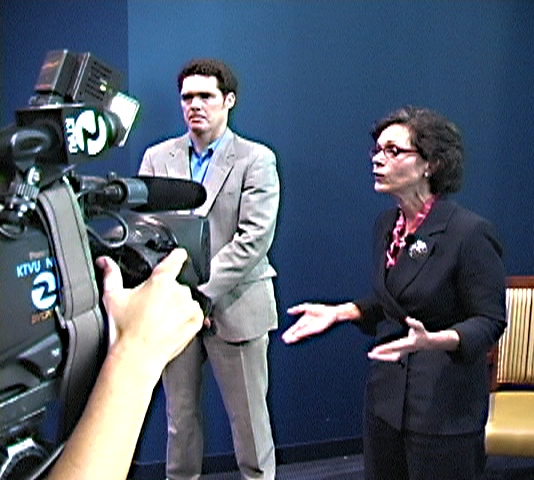
Author: Cell Phones Could Cause Damage Beyond Brain Cancer KTVU Ch. 2

SAN FRANCISCO — Cell phone use could cause substantial damage to the human body beyond brain cancer, an author who has written about cell phone safety said Wednesday.
Cell phones could damage users’ DNA, reduce their sperm count, and increase memory loss, said Devra Davis, who authored “Disconnect,” a book on cell phones and cancer.
“Cell phones can cause a number of serious diseases,” Davis said. She said phones could cause Parkinson’s disease, Alzheimer’s disease and hearing loss. She presented precautionary tips.

Dr. Devra Davis talks to the media
after her lecture at San Francisco’s
Commonwealth Club as cellphone-
caused brain cancer survivor,
attorney Bret Bocook waits his turn
to tell his story.


The Pentagon’s New Cyber Warriors

by Jim Wolf
WASHINGTON – Guarding water wells and granaries from enemy raids is as old as war itself. In the Middle Ages, vital resources were hoarded behind castle walls, protected by moats, drawbridges and knights with double-edged swords.
Today, U.S. national security planners are proposing that the 21st century’s critical infrastructure — power grids, communications, water utilities, financial networks — be similarly shielded from cyber marauders and other foes.

FCC changes cellphone safety tips
…The move comes amid a growing debate over cellphone safety and coincides with efforts in some jurisdictions – most notably San Francisco – to require wireless providers to more clearly state the radiation emissions of the phones they sell.

The revisions were made last week, without any formal announcement, to a consumer fact sheet posted on the FCC’s Web site. Consumer advocates criticized the agency for what they called a lack of transparency.

“A secretive change like the one that was just made raises questions of collusions with industry and does not help make the change credible,” wrote wireless industry consultant Michael Marcus in a blog on Public Knowledge, a public interest site.

An FCC representative declined to comment.
…
In its revised guidance, the FCC said that data on a phone’s radiation emissions is not a useful gauge of the risk posed by any device. The updated language omitted a previous suggestion that users buy phones with lower specific absorption rates, a measure of the rate of radio-frequency energy absorbed by the human body. The FCC now says that any phone approved by the FCC has passed its absorption tests and is safe.
…
The FCC’s new stance corresponds with the cellphone industry’s arguments against San Francisco’s ordinance and similar proposals elsewhere. The wireless trade group CTIA has said that phones with a specific absorption rate of 1.0 are not necessarily safer than devices with a rate of 1.6 – the national limit – and said that how a phone is used is a more meaningful gauge.

CTIA has filed a lawsuit against San Francisco seeking to block the ordinance, which would take effect in February, saying the measure would harm companies including Apple, AT&T, Verizon and Motorola. The group has sent executives to speak at hearings on other cellphone labeling proposals under consideration in Maine and California.

Eric Schmidt: Google implant anyone?
Schmidt was talking to The Atlantic about the possibility of a Google implant – a chip under your skin that would track you and provide easy web access. That, Schmidt said, was probably over ‘the creepy line’.

However, he followed that by saying: “With your permission you give us more information about you, about your friends, and we can improve the quality of our searches. We don’t need you to type at all. We know where you are. We know where you’ve been. We can more or less know what you’re thinking about.”

Some might argue that that is over the line too but Google will only read your mind “with your permission”, so that’s a relief.

SMeters Weak Link in 'SmartGrid' – EON EMF Digest 10-1-10

Sign the Petition for a California-wide smart meter moritorium. Details below.

Smart Meter security fears
Big Brother Watch has written a number of times about the forthcoming introduction of Smart Meters to British homes (see here and here for further information and our most in-depth articles). As you will see, we have always been wary of the remit of the technology and its implications for ever closer control of our personal energy use.

Smart_meter It is thus with much interest that we read a new report out last week – Smart Meter Security – published by clean technology analyst group Pike Research, which described smart meters as “one of the weakest links in the smart grid security chain”.

As eWeek Europe explains:

The technology at the heart of the government’s plans to roll out smart meters to every home and small business in the country are fundamentally insecure and will be successfully attacked by hackers, according to researchers.

“It would be naïve to think that smart meters will not be successfully attacked. They will be,” the report states. “In fact, smart meters represent a worst-case scenario in terms of security: the devices lack sufficient power to execute strong security software; they are placed in physically non- secure locations; and they are installed in volumes large enough that one or two may not be missed.”

According to Pike, the gap in smart meter and grid security won’t be solved using existing architectures and it will take until at least 2013 for solutions to be properly developed.

SMeters weak link in Smart Grid
Smart Meter Security Investment to Total $575 Million by 2015, but Meters Remain a Point of Vulnerability in the Smart Grid
August 3, 2010

Smart meter deployment continues to pick up speed in nearly all regions of the world; however, as with all information technologies introduced in the past 50 years, cyber security was at first overlooked in the rush to create a working device. Now, utilities, governments, systems integrators, device manufacturers, and nearly everyone else involved realize that smart meters and their surrounding networks can be attacked, and that cyber security measures are necessary to protect the meters and their environment. A new report from Pike Research forecasts that investment in smart meter security will total $575 million worldwide during the period from 2010 to 2015, representing an average of about $3.00 per meter during that period.

“Smart meters are one of the weakest links in the smart grid security chain,” says industry analyst Bob Lockhart. “Home area networks, commercial building networks, and utility networks all perform well in terms of keeping data encrypted within their domains. However, these domains terminate at the smart meter, and the only way for data to pass from one network to the other is for the smart meter to decrypt the data from one side and re-encrypt it on the other. Consequently, the data are, for a short while, unencrypted on the meter and could be successfully eavesdropped.”

SMeters Will Be Hacked, Warn Researchers
The actual meters are a weak point between home networks and smart grid infrastructure that will be exploited, experts warn
By Andrew Donoghue
The technology at the heart of the government’s plans to roll out smart meters to every home and small business in the country are fundamentally insecure and will be successfully attacked by hackers, according to researchers.

In a report published this week – Smart Meter Security – clean technology analyst group Pike Research states that governments and industry have rushed to develop smart meter technology but have not considered all the security issues around the technology.

“It would be naïve to think that smart meters will not be successfully attacked. They will be,” the report states. “In fact, smart meters represent a worst-case scenario in terms of security: the devices lack sufficient power to execute strong security software; they are placed in physically non- secure locations; and they are installed in volumes large enough that one or two may not be missed.”

Specifically, Pike believes that smart meters are an inherent weak point in the various networks which will ultimately form smart power grids, stated Pike industry analyst Bob Lockhart. “Smart meters are one of the weakest links in the smart grid security chain,” he said. “Home area networks, commercial building networks, and utility networks all perform well in terms of keeping data encrypted within their domains. However, these domains terminate at the smart meter, and the only way for data to pass from one network to the other is for the smart meter to decrypt the data from one side and re-encrypt it on the other. Consequently, the data are, for a short while, unencrypted on the meter and could be successfully eavesdropped.”

U.S. mounting first test of cyber-blitz response plan
By Jim Wolf
(Reuters) – The United States is launching its first test of a new plan for responding to an enemy cyber-blitz, including any attack aimed at vital services such as power, water and banks.
Thousands of cyber-security personnel from across the government and industry are to take part in the Department of Homeland Security’s Cyber Storm III, a three- to four-day drill starting Tuesday.
The goals are to boost preparedness; examine incident response and enhance information-sharing among federal, state, international and private-sector partners.
“At its core, the exercise is about resiliency — testing the nation’s ability to cope with the loss or damage to basic aspects of modern life,” said a release made available at DHS’s National Cybersecurity and Communications Integration Center in Arlington.
The simulation tests the newly developed National Cyber Incident Response Plan, a coordinated framework ordered by President Barack Obama.
The plan is designed to be flexible and adaptable enough to mesh responders’ efforts across jurisdictional lines. Refinements may be made after the exercise, DHS officials said.
The test involves 11 states, 12 foreign countries 60 private companies.

Moratorium on Wireless Smartmeters in the State of California
* Target: Governor Arnold Schwarzenegger and Attorney General Edmund G. Brown Jr.
* Sponsored by: No On Smart Meters Campaign

“Smart” meters do not save energy. The Smart Grid is part of the long-range plans the energy industry has to save itself money and be able to charge you more. This is the Big Picture. It may be an inevitability if our future depends on the growth of technology. What is NOT inevitable or required is the use of WIRELESS tech.

Too many suppressed or ignored studies plus the large and rapidly increasing number of reports of resultant health problems mandate that the onslaught of wireless tech development be halted at once until safety becomes a priority and can be guaranteed.

The “smart” meter program creates a pervasive electromagnetic field, and there are no studies yet published on the smartmeter that indicate that the levels of EMF emitted — collectively in a community — are safe. The “safety” standards the meters comply with are irrelevant to the situation, and were not designed to protect the public from health problems under the circumstances in which the meters are being used. Because the Smart Meter system is a mesh network, it is impossible to predict individual levels of exposure with any consistency or certainty. The un-safeness of the “safety” standards for the continuously transmitting “smart” meters is apparent from the reports of health problems, ranging from headaches to poor sleep to heart palpitations, that can begin after their installation.

The stated objectives of the Smart Grid Program can be accomplished without transmitting meters — but better yet would be a switch to “WiseGrid” solutions based on regionally appropriate mixes of renewable energy sources, guided by efficiency and conservation, which can be realized without the looming health, environmental, privacy and security hazards posed by wireless, hackable, invasive metering systems. This is a smarter path — better for humans and other living things, better for the planet and better for democracy.

Remember: Smartmeters Are Real Trouble! https://aqua-penguin-606771.hostingersite.com/ https://stopsmartmeters.org/ https://smartmeters.transbay.net https://www.electricalpollution.com/ https://emfsafetynetwork.org less”Smart” meters do not save energy. The Smart Grid is part of the long-range plans the energy industry has to save itself money and be able to charge you more. This is the Big Picture. It may be an inevitability if our future depends on the growth of technology. What is NOT inevitable or required is the use of WIRELESS tech.

Too many suppressed or ignored studies plus the large and rapidly increasing number of reports of resultant health problems mandate that the onslaught of wireless tech development be halted at once until safety becomes a priority and can be guaranteed.
…
PG&E and SoCal Edison have already begun to deploy wireless Smart Meters despite the fact that San Francisco’s City Attorney and multiple cities, counties, and towns have formally petitioned for an immediate moratorium until adequate investigation of the faulty and inaccurate meters is completed. These devices add an even stronger layer of microwave (RF) radiation to our homes and environments. Their peak power pulses repeat at least every one to two minutes as they gather and relay energy data from house to house throughout the day and night. In light of the growing number of people with electromagnetic sensitivity and the fact that children, the elderly, and those with chronic illness will be most adversely affected, and in light of the lack of FCC safety standards for chronic long term exposure to microwave (RF) radiation and in light of the call for use of the precautionary principle for wireless technology from global scientists, environmental agencies, advocacy groups and doctors,

we the undersigned request that you:
1. Place an immediate moratorium on all new wireless installations to allow time for a thorough independent and transparent scientific review.
2. Thoroughly investigate the PG&E Smart Meter proposal and potential health risks of these devices by holding public hearings.
3. Require PG&E to submit a characterization study of the smart meter system.
4. Allow customers to “opt out” of the program
Thousands of signatures have already been turned in on similar petitions to the CPUC and to government officials of Sonoma, Santa Cruz, Alameda, and San Francisco Counties.
We request your immediate consideration on this urgent matter, Thank you.
Sign the Petition Here

More Information Sought on Cell Phone Industry Influence on FCC
In an article in the current edition of OMB Watch’s Watcher, we discuss serious concerns about the extent of the wireless communications industry’s influence over regulators. Following San Francisco’s move to inform the public about potentially dangerous exposures to cell phone radiation, the Federal Communications Commission (FCC) – the agency in charge of regulating cell phone radiation levels – changed its website. The FCC deleted a suggestion to consumers to seek phones with lower radiation levels (known as SAR values), and added a lot of industry-speak downplaying the legitimate concerns raised by public interest groups. Now the Environmental Working Group (EWG) is demanding to know why the FCC made the changes and what role the wireless trade association might have played.

Fatuous in Fairfax – PG&E Blows it…Again: EON EMF Commentary

Fatuous in Fairfax – PG&E Blows it…Again
By Mary Beth Brangan and James Heddle

What Part of the Word ‘NO’ Don’t They Understand?
Last night Fairfax held another special Town meeting, allowing PG&E to formally respond to half the questions posed to PG&E by residents two weeks ago. PG&E thought that if they communicated properly to Fairfaxians, the town would drop their ordinance against smart meters. It was great theater, as PG&E once more demonstrated its abysmal ineptitude at responding to substantive public concerns, and its profound disrespect for public intelligence.

And, as Ellie Marks and Lloyd Morgan found when they presented at the Brisbane Town meeting about the new cell phone legislation passed by San Francisco recently, industry sent some of their biggest guns to quell the people’s rebellion. They know – all industry eyes are on ‘thought leader’ California as the growing wireless/electro-smog/cellphone/smart meter push-back gains momentum.

The gauntlet is thrown; the gloves are off; the chips are down; the truth is out; the handwriting is on the wall; and the multiple cats of privacy, property rights, hackability, public health, biological and environmental risks, economics and democratic choice are out of the bag. The corporate wireless build-out wet-dream is in danger of drying up from a terminal case of truthiness.

So, the Big Gun Gambit didn’t work in Fairfax.

Its not the ‘SmartGrid,’ it’s the wireless, stupid!
People shouted down Bill Devereaux (left, above), PG&E head of the Smart Grid/Smart Meter project after he gave a lengthy greenwash presentation on why PG&E claims wireless smart meters are so necessary to save the planet from climate change and make possible a plug-in electric car in front of every home. “We’ve heard all this before. Answer our questions!” demanded voices from the audience.

PG&E also flew in retired FCC staffer, now industry consultant, Robert Cleveland (center, above), who said he helped establish the FCC RF standards. He tried to convince people that smart meters were compliant with their regulations and that their regulations were adequate to prevent harm. “The fact that the last update of the standards was in 1996 tells me everything I need to know to know they’re inadequate,” one woman stated firmly during testimony.

Leeka Kheifets (right, above), an epidemiologist, currently at UCLA, also tried to reassure residents about safety. Kheifets is notorious for her work with Michael Repacholi in making sure industry interests take precedence over public health concerns at national and international levels.

Leeka worked with Repacholi to set the W.H.O. EMF policies and RF policies. (see one article explaining this below). “Who paid you to be here?” demanded a person from the audience. “PG&E,” a startled Leeka responded. “And who paid for the studies you’re quoting?” demanded another. “Responsible industry should fund the studies,” she insisted. “Smart meters would only be as strong as someone making a cell phone call outside your home,” Leeka asserted. “I don’t want my children exposed to cell phone-like radiation 24/7!” shouted one mother. Leeka was also given the hook.

More Questions Raised Than Answers Given
The educated and informed Fairfax audience was, except for one speaker, totally unimpressed. People were incensed that they were given no real answers to their specific questions regarding what the smart meter duty cycles were, what the peak pulse strengths were, why there was no opt out for medical reasons, why fiber optics, or other shielded cable options weren’t used, etc.

The one speaker who said he probably would be going against the grain, quoted a WHO (World Health Organization) statement in his remarks. Mayor Lew Tremaine retorted, “The WHO. is about as concerned about public health and safety as the World Bank.” The audience cheered its agreement.

Marzia Zafar of the CPUC also was part of the panel vigorously defending the need for the smart grid/smart meters. (She was also at the Sebastopol meeting in the spring.) At the end of the evening, she asked the crowd if it would accept the opinion of the upcoming report requested by Assm. Jared Huffman by the California Council on Science and Technology. Huffman has asked CCST to evaluate whether current FCC standards are adequately protective of public health. The audience shouted “NO!” PG&E reps and CPUC’s Zafar looked exasperated. She clearly doesn’t understand that the reason the public distrusts ‘official’ studies, is the many examples of such studies turning out to be industry-friendly cover-ups of the actual facts. (see articles below) Zafar’s behavior deepened the public perception that CPUC is the regulatee not the regulator in relation to PG&E’s policies.

The meeting went on until well after 10 pm. We videotaped and will post it asap.

The PG&E Traveling Clown Show will have a return engagement in Fairfax on Thurs. Oct. 28th at 7 PM. Based on the company’s consistent record, Fairfaxians expect it to be heavy on bovine waste material, but light on real answers to their substantive questions of public health, privacy and property rights, security, safety and democratic choice.

____________________

PS:

Here’s the link to a fabulous article by Louis Slesin of Microwave News from 2005, explaining Kheifets’ repeated references last night to studies on the relationship between childhood leukemia and EMFs. It also gives a good look at how science and standards have been manipulated by industry concerns.

And here’s a paste of a shorter article by Louis Slesin of Microwave News on Kheifets’ work with the WHO and Mike Repacholi.

WHO and Electric Utilities: A Partnership on EMFs

October 1, 2005… As members of the WHO Task Group make their way to Geneva for next week’s meeting to complete its Environmental Health Criteria (EHC) document on power-frequency EMFs, new information has emerged showing that the electric utility industry has played a major role at every stage of developing the review document.

Microwave News has learned that Mike Repacholi, the head of the WHO EMF project, recruited utility representatives to help write the original draft of the document and later asked them to review the completed draft. Then, as we reported last week, Repacholi invited eight utility representatives to attend next week’s task group meeting —the only observers who were invited (see September 22 entry). The task group and the industry observers will assemble at a WHO conference room in Geneva on Monday, October 3 to recommend exposure limits.

Documents show that Leeka Kheifets played a central role in drafting the EHC document. Kheifets has had a long relationship with EPRI, the research arm of the electric utility industry. She worked for EPRI before becoming Repacholi’s assistant in Geneva. Now, back in California, Kheifets recently disclosed to the British Medical Journal that she “works with the Electric Power Research Institute… and consults with utilities.” Among those who collaborated with Kheifets on the EHC document include: Gabor Mezei, also of EPRI, Jack Sahl of Southern California Edison, the U.S. utility and John Swanson of National Grid, the U.K. utility. 

Repacholi sent a draft of the EHC out for review in early July. Among those asked for comments were: 

• William Bailey, Exponent Inc., U.S.
• Federation of Electric Power Companies of Japan (FEPC) 
• Kent Jaffa, Pacificorp, U.S. 
• Michel Plante, Hydro-Quebec, Canada
• Utility Health Sciences Group (USHG), U.S. 

To be sure, a number of independent researchers were also participated, but it is highly unusual, if not unprecedented, for a WHO health document to be reviewed by so many with such strong ties to the affected industry. 

Not surprisingly, most of the industry comments seek to downplay potential health risks. 

Here for example is an excerpt from those filed by Plante on the epidemiology chapter:

“The whole section on cancer seems more like a desperate attempt to maintain some positive statistical association from epidemiological studies alive than a factual and honest presentation of arguments both, for and against, carcinogenicity.”

Plante, who will sit in on the weeklong deliberations at Repacholi’s invitation, has been assigned to the epidemiology working group, where he will no doubt continue to maintain that the link between EMFs and childhood leukemia is inconsequential.

Plante has played a villainous role in the EMF controversy. A decade ago, he was involved in stopping work on an epidemiological study on possible EMF cancer risks to electric utility workers. The Canadian-French study was the first —and the last— to investigate whether exposure to high-frequency transients could lead the cancer. The multi-million dollar study, published in the November 1, 1994 issue of the American Journal of Epidemiology was considered, at the time, a landmark event. The research team led by Ben Armstrong and Gilles Thériault of McGill University found strong cancer risks as well as dose-response. Members of the EMF community were excited by the results and looked forward to follow-up efforts. But, Plante worked with others at Hydro-Quebec to shut down the McGill project by forcing Thériault to return the data he and the others had painstakingly collected (see MWN, N/D94). Thériault was never allowed near it again.

Jack Sahl, another invited observer who will also sit in on the epidemiological working group, was a leading member of the UHSG for much of the 1990s. The USHG was the brainchild of Tom Watson, now of Watson & Renner, a law firm based in Washington. In the 1990s, all the major electric utilities in the U.S. —by one count, 76 participated — were members of the USHG. Watson was originally invited to attend next week’s meeting, but his invitation was later withdrawn. Still obscure is why Repacholi changed his mind and disinvited Watson.

It is not known who wrote the comments submitted by the USHG, but it is possible that every electric utility that is a member of the USHG was given the chance to review the WHO document and funnel its comments back to the WHO.

What is clear is that the USHG attempted to weaken the EHC document. For instance, while the draft states that, “evidence is increasing that magnetic fields could interact with DNA-damaging agents, at least in some cellular models,” the USHG suggested that for the “sake of clarity and balance… it would be useful to include… ‘Any such effects on DNA cannot, however, be considered as established’.”

USHG also proposed the following change in the chapter on protective measures: “It should also be pointed out that ‘redirecting facilities or redesigning electrical systems may be so expensive as to be inconsistent with the low-cost and no-cost steps typically viewed as prudent avoidance’.”

Nor was the USHG bashful about promoting the utility position, arguing:

“It would be useful for the summary to include a clear statement that the scientific research does not establish ELF EMF as a cause or contributing factor in any disease or adverse health effect, including cancer.”

Very useful to industry, indeed.

Thanks to Repacholi, the electric utility industry has been and continues to be a full partner in the writing of the EMF document —a document which will be the WHO’s official position on EMFs for years to come. The most disconcerting part of all is that no one at the WHO thinks he is doing anything wrong.


Devra Davis on The Great Cellphone Cover-Up – EON EMF Video Digest 9-30-2010


Excellent New Video Report

Cellphone safety: What aren’t they telling us? (Direct link to the full CBC program)
CBS’s Wendy Mesley talks with scientist Devra Davis about the link between cellphone use and our health.
We keep hearing studies saying we don’t need to worry about cellphones. Wendy speaks with author Devra Davis, whose new book, Disconnect: The Truth About Cell Phone Radiation, What the Industry Has Done to Hide it, and How to Protect Your Family, reveals how one of the world’s largest industries is taking this very seriously. Here’s the YouTube Channel version:

For more on this topic, please check these playlists on our YouTube Channel: Electro-Magnetic Health Protection and ‘Smart’ Meters – Dumb Idea.

You may also find useful the two posts below, our documentary Public Exposure and our interview with BioInitiative Report Co-Editor Cindy Sage. Both are also available as DVDs here and here.

Pulling the Plug on SMeters – EON EMF Digest 9-29-2010

Data proves smartmeter scheme costing everyone more
Queen’s Park – Andrea Horwath, Leader of Ontario’s New Democrats, says data from Toronto Hydro confirms that Dalton McGuinty’s so-called smart meters have raised rates for 80 per cent of consumers and aren’t producing any conservation gains for Ontario.

“Dalton McGuinty’s so-called smart meters make eHealth look like a bargain. For a billion and half dollars we have a scheme that leaves 80 per cent of people paying higher rates without shifting usage patterns,” said Horwath. “There’s nothing smart about Dalton McGuinty’s smart meters when it’s hiking people’s hydro bills.”

A Toronto Hydro study looked at ten thousand households in Toronto that have been billed using so-called smart meters since 2009. The study confirmed that after a year of operation:
• On average 80 percent of households have been paying higher rates than before smart meters were installed and there has been little if any shift in household energy consumption.
• In one billing period – from June to September, 2009 – ninety-two per cent of households paid more.
• On average, households seeing an increase were paying anywhere from 2 to 7 per cent more.
• These increases are separate from the added cost to households for the cost of the smart meter itself. Across Ontario, consumers will be paying $1.25 – $4.45 a month for decades to recover these costs.
“The McGuinty Liberals have spent billions on a scheme that leaves people paying more and leaves Ontario falling behind in our conservation goals,” said Horwath.

Victoria, Australia pulls plug on smart meters
The Victorian state government has finally twigged that most people will get screwed by electricity smart meters.
Energy Minister Peter Batchelor announced an indefinite moratorium on the smart meter rollout to every home across the state – because of concerns pensioners and the poor would be hardest hit by higher electricity prices. The writing has been on the wall for some time.

Did SmartMeter Cause San Bruno Fire?
Now we don’t want to jump to any conclusions, but the signs are beginning to point to the possibility that a ‘smart’ meter may have played a role in the fire and explosion that likely killed more than a dozen people, injured dozens more and destroyed an entire neighborhood. The Chronicle reported on this possible connection in their article this morning, and the web has been atwitter with speculation since last Thursday.

At the very least, PG&E’s chickens are coming home to roost. The horrific repercussions are coming to light of a corporation that cares more about profit than public safety and their lapdog the CPUC who have let them get away with it all. PG&E Workers are coming forward to testify about upper management ignoring safety procedures in an attempt to maximize profit. For this and many other reasons, major news outlets are calling for PG&E CEO Peter Darbee to step down.