Monthly Archives: September 2010

EON EMF Digest 9-11-2010: A look at PG&E

Some PG&E Background – A Rap Sheet

PG&E, Owner of Pipeline, Also Runs Major Political Operation
Energy giant PG&E, which owns and manages a natural gas pipeline that Thursday night ignited a massive inferno in San Bruno, Calif., is one of the nation’s most notable political players, routinely spending millions of dollars each year on government lobbying and campaign donations, a Center for Responsive Politics analysis finds.…

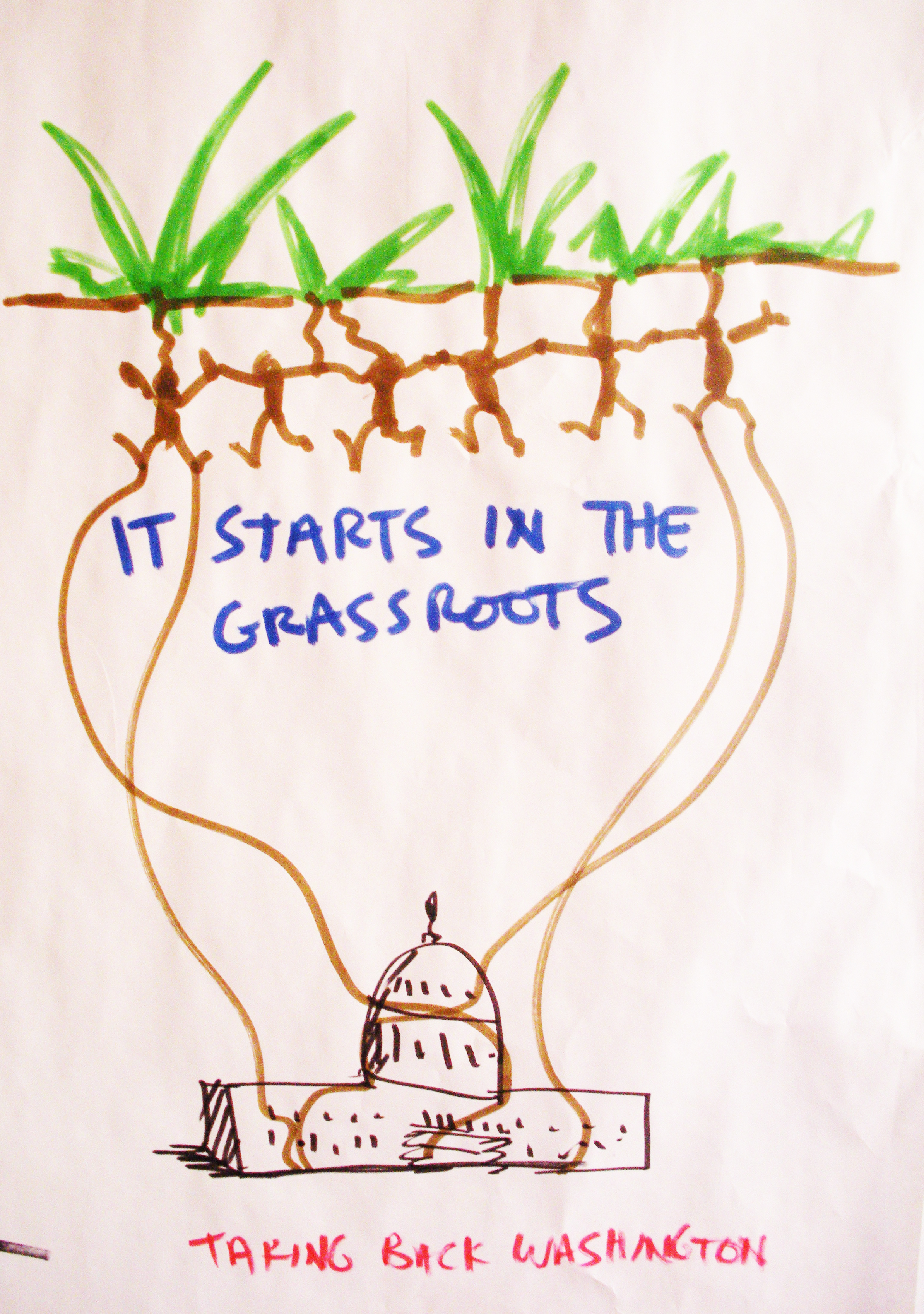
Cartoon by Brian Narelle

…Since 2000, PG&E Corp., the parent company of PG&E Co., has spent more than $112 million on federally reportable lobbying efforts, according to the Center’s analysis. Its roster of lobbyists includes an elite force of ex-government officials, and at least one of the lobbyists the company has deployed this year is a former member of Congress, Rep. Vic Fazio (D-Ca.).
And the explosion in San Bruno comes at a time when PG&E Corp. is reaching new heights in lobbying efforts.
During the first six months of the year, PG&E put unprecedented capital into lobbying efforts, reporting to the federal government that it’s so far spent nearly$44 million. Such a figure represents a more than 600 percent increase from the total it spent during all of 2009, and marks an industry-wide record for electric and utilities companies.
Much of the lobbying money it’s spent this year has gone toward efforts to influence a California budget proposal that would make it difficult for counties in the state to start their own electric utility companies.

PG&E – A review of a shameful history
PG&E isn’t your average utility company. Up until the mid 1990’s it had been the largest privately owned electric utility company in the U.S. with over 4 million customers, covering 2/3rds of California. The company has played a major role in shaping California and its political climate during the 20th century.

One hundred years ago, at the dawn of the electrical revolution, the Southern Pacific Railroad company’s big four, Charles Crocker, Mark Hopkins, Leland Stanford and Colis Huntington had a complete monopoly on the politics and economy of California. They owned the banks, judges, politicians and transportation system of the state. They also held deeds to 1/5 of its arable land.
The Southern Pacific Crowd joined forces with J.P. Morgan and European financiers who were using vast amounts of royalist money to build up and take financial control of America’s corporations. This unholy alliance of royalist influence over command and control of corporate structure was also behind the creation of PG&E and its primary roll model, the english controlled General Electric company, which is the largest company in the world today.
This gigantic company hitched its values and vision to the monopolistic agenda…

How PG&E hid $4 billion – diagramming the corporation’s global ‘evil empire’
Investigative reporter Don Ray
PG&E: The evil empire
While San Francisco’s electricity infrastructure crumbles from a lack of investment, PG&E has sucked your money out of town and used it to build and expand a global empire
Pacific Gas and Electric Corp. – Holding company formed in 1997 in part to protect Pacific Gas and Electric Co. money from possible problems during deregulation
California
Pacific Gas and Electric Co. – Local utility, which sends ratepayer money to PG&E Corp. – but gets none back [ the list goes on…]

If the attorneys from the city of San Francisco and the state attorney general’s office are correct, some of the money a San Francisco customer paid for an electric bill might have taken a path such as this:
PG&E Co., which sells electric power to most of northern California, cashes the check. Some of the money then goes to its parent company, PG&E Corp.
Some or all of that money could then go to PG&E National Energy Group LLC, a Delaware limited liability company based in Bethesda, Md., which was formed for the purpose of holding stock in another Bethesda-based Delaware corporation called PG&E National Energy Group Inc.
Then PG&E National Energy Group Inc. might receive the money from it’s parent limited liability corporation. Next, the cash might trickle down to PG&E Enterprises, a California corporation based in Bethesda.
Then it could drip down another level to PG&E National Energy Group Holdings Corp., a California corporation based in Bethesda that is a holding company for PG&E National Energy Group generation and energy trading subsidiaries.
It could easily pass from there to PG&E Energy Trading Holdings LLC, a Delaware limited liability company also based in Bethesda. It was formed for the purpose of holding stock in PG&E Trading Holdings Corp.
As you might guess, the next stream leads to PG&E Energy Trading Holdings Corp., a California corporation based in Bethesda. It’s a holding company for energy trading and overseas entities.
Next stop: PG&E International Inc., a California corporation based in Bethesda that is a holding company for overseas project companies.
Now the money could flow down the East Coast to PG&E Overseas Holdings I Ltd., a Cayman Islands company. It is the owner of PG&E Overseas Holdings II Ltd, based in Labuan, Malaysia. The company is the owner of PG&E Corp. Australian Holdings Ltd., who could be the next recipient.
Australian holdings is based in Brisbane and is the holding company for Australian entities.
It might pass some of that electric bill money to PG&E Energy Trading Australia Ltd., an Australian corporation based in Brisbane that markets energy.
If the theory holds up, San Franciscans – who face blackouts due to inadequate investment in PG&E’s local system – may very well have been paying to keep the lights on in Queensland, down under.

Who Trusts the CPUC?

CPUC can’t be trusted to investigate PG&E explosion in San Bruno
By Dennis Wyatt – Managing Editor – Manteca Bulletin
The California Public Utilities Commission should not investigate PG&E for the killing of four people, maiming countless others and destroying 37 homes in San Bruno.
They can’t be trusted.…
The CPUC also routinely approves massive rate increases for PG&E that are often based on the San Francisco-based utility’s claim they will use the money to do routine maintenance and then siphon the funds collected from ratepayers for other purposes. One recent rate increase application the CPUC approved included money to replace 40,000 aging power poles. An audit done several years later showed that PG&E only replaced 4,000 poles. How it came up was PG&E had the gal to ask for another rate increase to replace the poles that weren’t replaced with the first rate increase.
Is there a pattern here?

‘SmartGrid’ Security Threatened by Hackable Wireless

Security Pros Question Deployment of Smart Meters
[from March, 2010, but still relevant – Eds]
The country’s swift deployment of smart-grid technology has security professionals concerned that utilities and smart-meter vendors are repeating the mistakes made in the rollout of the public internet, when security became a priority only after malicious attacks had reached mass levels.
But when it comes to the power grid, the costs of remote hack attacks are potentially more dramatic…
Smart grids use digital meters and control mechanisms that allow utility companies to better control the flow of electricity remotely and promise to save energy and reduce utility costs. Smart meters installed in homes and businesses allow utility companies to remotely communicate with the devices to read usage levels and control the delivery of services.
But security research on the systems is lagging behind the deployment of smart meters, which has already occurred in some places in the United States. PG&E is in the lead with 5 million gas and electric smart meters deployed since 2006, which represents about half of its customer base. PG&E expects to deploy an additional 5 million smart meters by 2012.
Among the concerns Carpenter expressed was one related to vulnerabilities that could arise in the encryption schemes used in smart-grid systems, given that the systems are expected to have a lifespan of 15 to 20 years. Advances in encryption cracking that are likely to occur over that time period would make the encryption obsolete, he said.
He also discussed a need to examine the aggregation points that receive communication from the meters and have “an immense amount of control” in some cases.
“In some circumstances they’re simply going to give you a denial-of-service if you tamper with them because the crypto is done appropriately from the head-end control system down to the meters and the aggregation point really can’t tinker much with it,” Carpenter said. “But in other [cases] there’s a great deal of control that that aggregation point has, and they’re sitting on the top of a [utility] pole — not in a brick building [with] guard dogs and razor wire … and [they have] an ethernet cable.”
An attacker could sniff traffic going to the aggregation point or possibly send commands to the meters or inject code into the backend control system.

Feds’ Smart Grid Race Leaves Cybersecurity in the Dust
[from March, 2010, but still relevant – Eds]
Amid the government-funded rush to upgrade America’s aging electric system to a smart grid comes a strange confluence of press releases this week by the White House and the University of Illinois.
Tuesday morning, President Obama, speaking at Florida Power and Light (FPL) facilities, announced $3.4 billion in grants to utility companies, municipal districts and manufacturers to spur a nationwide transition to smart-grid technologies and fund other energy-saving initiatives as part of the economic stimulus package.

Strange, then, that another press release distributed Monday by the Information Trust Institute at the University of Illinois announces a grant of $18.8 million to four academic institutions to fund a five-year research project into securing the power grid. The project is supposed to make certain that the smart meters and other devices implemented by power companies can resist hackers and other attackers.

“It reflects a strong consensus that cybersecurity and resilience will be critical to the realization of a modernized, reliable, and efficient power grid, so that it will be able to guarantee delivery of electricity to consumers and maintain critical operations, even when malicious cyber attacks occur,” reads the press release.
The only problem is, by the time the research project is completed, most of the nation will have already adopted untested and unsecured technologies. [emphasis added – Ed.]

Some History

White House Announces ‘SmartGrid’ Grants
Oct. 2009 [There is NO federal ‘mandate’ for wireless ‘smartmeters,’ and PG&E even failed to qualify for the grant!]
ARCADIA, FLORIDA – Speaking at Florida Power and Light’s (FPL) DeSoto Next Generation Solar Energy Center, President Barack Obama today announced the largest single energy grid modernization investment in U.S. history, funding a broad range of technologies that will spur the nation’s transition to a smarter, stronger, more efficient and reliable electric system. The end result will promote energy-saving choices for consumers, increase efficiency, and foster the growth of renewable energy sources like wind and solar.

The $3.4 billion in Smart Grid Investment Grant awards are part of the American Reinvestment and Recovery Act, and will be matched by industry funding for a total public-private investment worth over $8 billion. Applicants state that the projects will create tens of thousands of jobs, and consumers in 49 states will benefit from these investments in a stronger, more reliable grid. Full listings of the grant awards by category and state are available HERE and HERE. A map of the awards is available HERE.

SmartGrid Security Research Launched
[Will not be completed until AFTER deployment – Ed.]
The term “Smart Grid” refers to the integration of the existing physical infrastructure of the power grid with an advanced communication and control cyber infrastructure, with the ultimate goal of making energy transmission and distribution more efficient— and therefore cheaper for consumers and less wasteful of resources.
However, Smart Grid technologies may themselves introduce new problems, such as increasing the vulnerability to cyber attack as power grid resources become increasingly linked to the Internet. For example, experts recently warned that some types of “smart” automated meters could be hacked by attackers with minimal equipment and knowledge, and that an attacker who succeeded in gaining access might be able to cause blackouts. Those blackouts could have serious economic and human consequences if they are widespread or affect critical systems, such as airports or city traffic light systems.
“Ultimately, the extent to which the Smart Grid vision is achieved is going to depend on how functional and robust the cyber infrastructure is,” explained Ilesanmi Adesida, dean of the College of Engineering at Illinois.

EON EMF Digest 9-10-2010

Neighborhood in California Is Set Ablaze by Explosion
(PG&E negligence at fault?)
Pacific Gas and Electric Co., the utility company that serves the area, said one of its gas lines had ruptured.
Residents of the neighborhood said PG&E investigated a pungent gas leak over the previous week but did not take action, according to The Bay Citizen.
“They already knew about the leak and they didn’t do anything,” said Alex Monroy, who lives on Claremont Drive, not far from where the broken gas main burst into flames.
San Mateo Assemblyman Jerry Hill told The Bay Citizen he was “outraged” to learn that some residents had complained to PG&E about gas leaks in the neighborhood “for up to three weeks” before the explosion.
Mr. Hill said the pipe that ruptured was installed in 1948.
“I will be working closely with the Public Utilities Commission to ensure that a thorough investigation is conducted into the cause of this fire,” Mr. Hill said in a statement.
The explosion erupted on a hillside near Interstates 280 and 380, in a residential area about two miles west of San Francisco International Airport.

Residents Reported Leak Days Before Explosion
PG&E investigated and left, one man says; assemblyman `outraged’
Residents of the San Bruno neighborhood devastated by Thursday’s explosion said PG&E investigated a pungent gas leak over the previous week but did not take action.
“They already knew about the leak and they didn’t do anything,” said Alex Monroy, who lives on Claremont Drive, not far from where a broken gas main burst into flames early Thursday evening, scorching everything around it.
PG&E has confirmed that one of its high-pressure natural gas transmission lines ruptured, causing the blaze that destroyed 38 homes, damaged 120 and killed at least three people.

Radiation fears stymie SmartMeter installation
‘SmartMeters’ have been getting a lot of media attention lately, and PG&E, the company behind the wireless devices, has been ramping up its public relations campaign. A lot.
COMMERCIAL: California is on the cutting edge of the new green economy and SmartMeters are part of that edge. We’ve been in the dark far too long, and I feel enlightened because it provides the opportunity to conserve energy.
Well, PG&E’s paying a fair penny for the woman featured in the commercial to feel enlightened. She’s part of an ad campaign you can find on network TV along with the websites of the San Francisco Chronicle and Oakland Tribune. And while it’s certainly possible the customers who are paying PG&E may feel enlightened by SmartMeters too, some would prefer to turn out the lights on the new technology.
KALW’s Brian Pelletier has the story.


Concerns Raised over Use of Computer RFID Chips to Track Preschool Children

Privacy advocates [ but no health protection advocates] are raising concerns over the use of RFID chips to help track students at a public preschool in California. The technology is being tested on 240 preschool students in the Head Start Program in Richmond. Preschool students have been outfitted with jerseys carrying tiny computer chips that have a radio antenna that can be tracked from a distance. We host a debate. [includes rush transcript]

Wi-Fi Concerns in Schools
Some Ontario Parents are concerned that Wi-Fi in schools is making their children sick, the CBC’s Loanna Roumeliotis reports. Magda Havas featured.

High-Tech Utility Meters Spark a Fight
WSJ
A new, high-tech utility meter is inflaming passions around the Bay Area. Now PG&E Corp. is trying to tamp down growing regional opposition to its $2.2 billion meter upgrade—but is failing to mollify many local critics.

Smart metering: what potential for householder engagement?
The argument for the implementation of ‘smart’ metering, which is an elastic term, varies according to circumstance and place. In some countries, the business case for establishing an advanced metering infrastructure (AMI) relies in part on improving consumption feedback to customers and assisting in the transition to lower-impact energy systems. There is an expectation that AMI will lead to reductions in both the demand and the cost to serve customers through improved communication, but little evidence exists to show overall demand reduction.

Local doctor shares his views on dangers from electromagnetic field radiation
by Lillian Cox
Dr. Dan Harper, M.D., was among the first to arrive at the Encinitas City Council meeting the evening of July 21. Carrying a 12-inch stack of medical journal articles about the health risks of electromagnetic field, or EMF, radiation, he was there to speak on behalf of his patient, Michael Schwaebe.
Schwaebe was appealing the placement of WiMAX towers on the site of the former Cabo Grill at Coast Highway 101 and La Costa Avenue. WiMAX is often referred to as “a cell tower on steroids.”
Harper directed his initial remarks to the Sprint Clearwire representatives in attendance when he quoted author Upton Sinclair: “It is difficult to get a man to understand something when his salary depends upon him not understanding.”
Harper said he was frustrated, but not surprised, that he was unable to complete his presentation.
It would have been illegal.
Dr. Dan Harper offers a few tips on how to protect yourself from EMFs:

EON EMF Digest 9-8-2010

EMF Health Protection and SmartMeters
Watsonville Bans Smart Meters
AN EMERGENCY INTERIM ORDINANCE OF THE ClTY COUNCIL OF THE ClTY OF WATSONVILLE ESTABLISHING A MORATORIUM OF
TWELVE (12) MONTHS ON THE INSTALLATION OF SMARTMETERS AND RELATED EQUIPMENT WITHIN THE ClTY OF WATSONVILLE
OR IN, ALONG, ACROSS, UPON, UNDER AND OVER THE PUBLIC STREETS AND PLACES WITHIN THE ClTY OF WATSONVILLE, AND DELCARING THE URGENCY THEREOF…

Cartoon by Brian Narelle

Section 4. This City Council finds and determines that: (a) there is a current and immediate threat to the public health, safety and welfare; (b) the moratorium must be imposed in order to protect and preserve the public interest, health, safety, comfort and convenience and to preserve the public welfare; and (c) it is necessary to preserve the public health and safety of all residents or landowners adjacent to such uses as are affected by this interim ordinance as well as to protect all of the citizens of Watsonville by preserving and improving the aesthetic and economic conditions of the City.

A Cell Phone Nation is a Captive Nation
Federal court: 4th Amendment standard does not always apply to mobile phone location data
Law enforcement can still be required to obtain a search warrant for access to citizens’ mobile phone location data, but police need not uphold the traditional Fourth Amendment standard of “probable cause” in the process of such an investigation, a federal appeals court ruled Tuesday.
While civil liberties groups which argued in favor of stronger privacy protections largely called the ruling favorable, it still leaves room for law enforcement to continue large-scale mobile spying operations.

SmartMeters interfere with baby monitors, other household gadgets
You’ve read about problems with PG&E’s SmartMeter, especially the folks who claim it’s causing huge increases in their electrical bills. But that’s not the only issue with the vaunted high-tech device.
As Pacific Gas & Electric’s SmartMeter installation has rolled across Northern California, dozens of readers have contacted Action Line complaining about newly found erratic behavior with their household electronic gadgets. A conflict occurs, apparently, when the SmartMeter electronically transmits information back to the utility.

Mill Valley council asks for SmartMeter opt-out provision, health study
The Mill Valley City Council will ask state energy regulators to let some customers opt out of using SmartMeters, the devices Pacific Gas and Electric Co. is deploying throughout Northern California.
The council on Tuesday also joined Assemblyman Jared Huffman’s call for a study of the health risks of the meters, which use wireless signals to transmit data on energy use.
Mill Valley joins a number of local governments that have voiced concerns in recent weeks over the meters’ privacy, accuracy and safety. On Tuesday, the council voted to express its concerns in letters to the California Public Utilities Commission, which regulates PG&E, and the California Council on Science and Technology, which advises the state on science and technology issues.

Smart meters alone may not save much energy -study
LONDON, Sept 8 (Reuters Life!) – Smart meters to boost energy efficiency in homes do not automatically achieve a significant reduction in energy demand, research showed on Wednesday.
Smart meters record energy or water consumption and send the readings back to the utility for monitoring and billing.
It is hoped that consumers will save energy through increased awareness of how much they use and that estimated bills will be eliminated.
Previous studies have shown that smart meters encourage homeowners to cut their energy use by 3 to 15 percent, but researchers said consumers also need educating about energy use.
Two scientific papers published in the September issue of the publication Building Research and Information showed the technology alone is not enough to deliver significant domestic energy savings.
In her paper, Sarah Darby at the Environmental Change Institute at the University of Oxford examined how householders used feedback on their energy consumption with and without smart meters. She found that a reduction in energy demand “did not flow naturally from improved billing information”.

Energy and EMF – Editor's Comment

ENERGY RUSH! – Mega-corporations Scramble to Profit from Climate Chaos
by James Heddle

Like the proverbial ‘Old Soldier,’ climate change denialists may not have died, but they do seem to be fading away as a global energy rush takes shape in the early years of the 21st century.

Cartoon by Brian Narelle

Now that non-carbon-based energy sources are all the rage, the Boardroom Boys of Big Nukes, Big Solar, Big Wind, Big Telecom, Big IT and Big Banking have dollar signs in their eyes and grandiose wet dreams in their heads over how to cash in on their combined ‘competitive advantages’ and make sure their self-serving roadmap is seen as the only alternative for ‘saving the planet.’

PG&E’s currently attempted ‘SmartMeter’ build-out caper in California, and the international wireless ‘SmartGrid’ fantasy of which it is a part, are both manifestations of this corporate mega-tech delusion – a kind of technocratic totalitarian Promised Land with ‘smart’ wireless appliances serving as Big Brother’s corporate and governmental eyes and ears in every household and enterprise.

For the record, EON’s position on this is that Schumacher’s and Kohr’s dictum ‘Small is Beautiful’ is now more relevant than ever. Small and mid-scale, local micro-grids – or ‘WiseGrids’ – communicating ‘through-the-wires,’ and based on regionally appropriate mixes of renewable energy sources, guided by efficiency and conservation, represent the wisest, softest, most democratic path through the inevitable energy transition to a post-carbon culture.

Such WiseGrid solutions can be realized without the looming health, environmental, privacy and security hazards posed by wireless, hackable, invasive metering systems and by giant-scale, centralized, corporately-controlled wind, nuclear and solar installations. The WiseGrid path is way smarter than a ‘SmartGrid’ path – better for humans and other living things, better for the planet and better for democracy.

EON EMF Digest 9-4-2010

Smart meter detractors question health risks
In the moments before an independent consulting firm was set to present its findings on the accuracy of Pacific Gas & Electric Co. smart meters, presenters lined up at a microphone to voice their 3-minutes-or-fewer opinions to the California Public Utilities Commission about the conflict-arousing devices.
But rather than rail against the reportedly higher electricity bills that had prompted the CPUC to commission the report, presenter after presenter talked instead about health risks.

Health Questions Loom Over CPUC Release of ‘Smart’ Meter Report
by Joshua Hart
Thursday Sep 2nd, 2010 10:54 AM
Today, the California Public Utilities Commission (CPUC) is expected to release the report of an investigation into widespread accusations that PG&E’s so-called ‘smart’ meters are inaccurate and routinely overcharge customers. Aside from concerns about accuracy, there is growing alarm from citizens over health risks from the new meters and this has led 20 cities and counties throughout California to demand a halt to smart meter installation.

CPUC report: Nothing wrong with ‘smart meters’
There’s nothing really wrong with the so-called “smart meters” being installed by Pacific Gas & Electric Co., says a study done for the California Public Utilities Commission following public outrage in the Central Valley over inexplicably high electric bills after the new meters were installed.

Critics such as state Sen. Dean Florez, D-Shafter, remain unconvinced.
“I believe this report raises more questions than answers,” he says. “I was especially surprised at the limited number of customer complaints that were reviewed. I’m also concerned that there were no industry standard established prior to smart meters being placed on residents’ homes.”

PUC Smart Meter Report Raises More Questions Than Answers
“I think it is key that we take the time now to have an extensive and detailed hearing on Structure’s work product. So far what is missing from the report is any sense that this was a true ‘investigation’ as opposed to a review of PG&E’s smart meters.” Senator Dean Florez

‘Homeopathic’ Signals from DNA
This one thanks to Dr. Magda Havas, who says:
This is very interesting research showing that DNA from viruses and bacteria, in dilute solutions (similar to what is used in homeopathy), generate electromagnetic signals. If this is indeed the case, then those signals may be providing information to nearby cells if those cells have receptors tuned to the same frequency. By mimicking the same signals or interfering with those signals scientists can control different mechanisms including potentially harmful toxic microbes. This fits in with our exposure to digitally pulsed electromagnetic frequencies at very low intensities.
Once we understand the message that is sent and how it is received we can manipulate cells and organelles (by providing them with electromagnetic signals) and thus we can use this energy to harm or heal in subtle ways.
Scientists are beginning to understand (decode) the genetic code and now what we need to decode the electromagnetic code and how to translate electromagnetic signals into information at the cellular and subcellular level.
Very exciting development with “unimaginable” applications and consequences!!!!!